Alexandre Conesa
Principal architect who has shipped low-latency comms platforms and reviewed thousands of repos. Judges how hard — and how clean — the build really is, and chairs the final deliberation.
Four judges, one per axis of the 20-point matrix: technical complexity, whether it actually runs, the experience, and real-world impact. They watch every demo live, on stage, and question every team in person. No slides to hide behind.
Principal architect who has shipped low-latency comms platforms and reviewed thousands of repos. Judges how hard — and how clean — the build really is, and chairs the final deliberation.
Performance engineer with zero patience for demo-ware. Checks whether the app actually runs on stage or leans on hardcoded mock data. If it only works in the slides, it does not work.
Product-minded researcher who judges whether a stranger can understand the tool within ten seconds of opening it. Rewards fluid UX and punishes confusion, no matter how clever the back-end.
Thirty years turning prototypes into deployed systems across industry and the public sector. Judges whether a hack solves a real problem and could survive beyond a weekend — especially the civic and hardware builds.
Every team gets the same stage and the same four judges. What runs, scores.
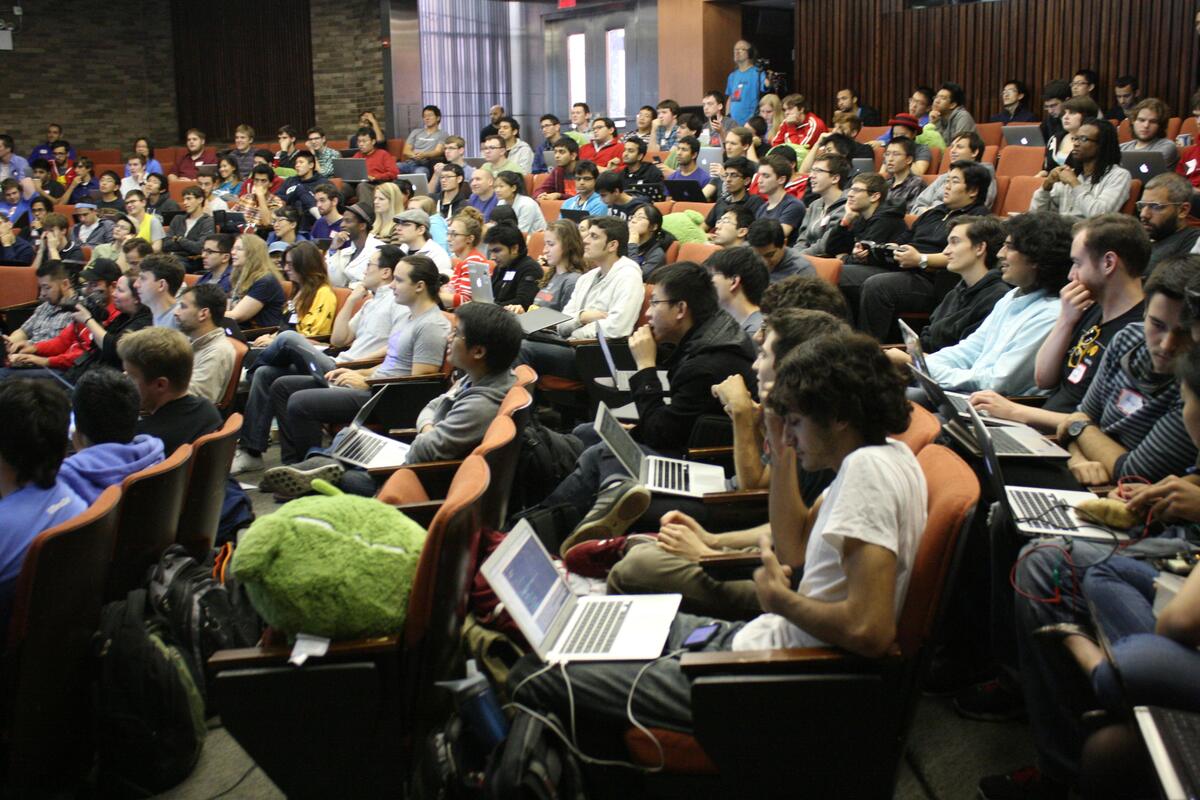
Photograph: Matylda Czarnecka, CC BY-SA 2.0 · resized. More in the gallery.Each judge scores every team independently on their axis of the matrix. The four scores are added into a single total out of twenty; ties are broken by the Head of Jury on the record. Crowd noise doesn’t count — only what runs on stage does.
“We are not impressed by the pitch. We are impressed by the thing that actually connects, on stage, on the partner’s API. No slides. Show me it running.”
Across the MOITUS weekends, 4-strong panels have scored hundreds of live builds — and we’re always looking for new expert voices to judge or mentor. If you can tell working tech from a good pitch, we’d like to hear from you.